Position paper: the case for slower water in the Dry Zoneရပ်တည်ချက်စာတမ်း — ခြောက်သွေ့ဇုန်တွင် ရေကို နှေးနှေးသုံးရန် အကြောင်းပြချက်
Five seasons of data from 214 paddy plots suggest that water retention is a soil property before it is an irrigation problem.စပါးကွက် ၂၁၄ ကွက်မှ ရာသီငါးခု၏ အချက်အလက်များအရ ရေထိန်းနိုင်စွမ်းသည် ဆည်ရေသွင်းရေး ပြဿနာမဟုတ်မီ မြေဆီလွှာ၏ ဂုဏ်သတ္တိ ဖြစ်သည်။
8 October 2026၂၀၂၆ ခုနှစ် အောက်တိုဘာ ၈ ရက်12 min read၁၂ မိနစ် ဖတ်ရန်Generous Agri Field Teamဂျင်နရပ်စ် အဂရီ ကွင်းဆင်းအဖွဲ့
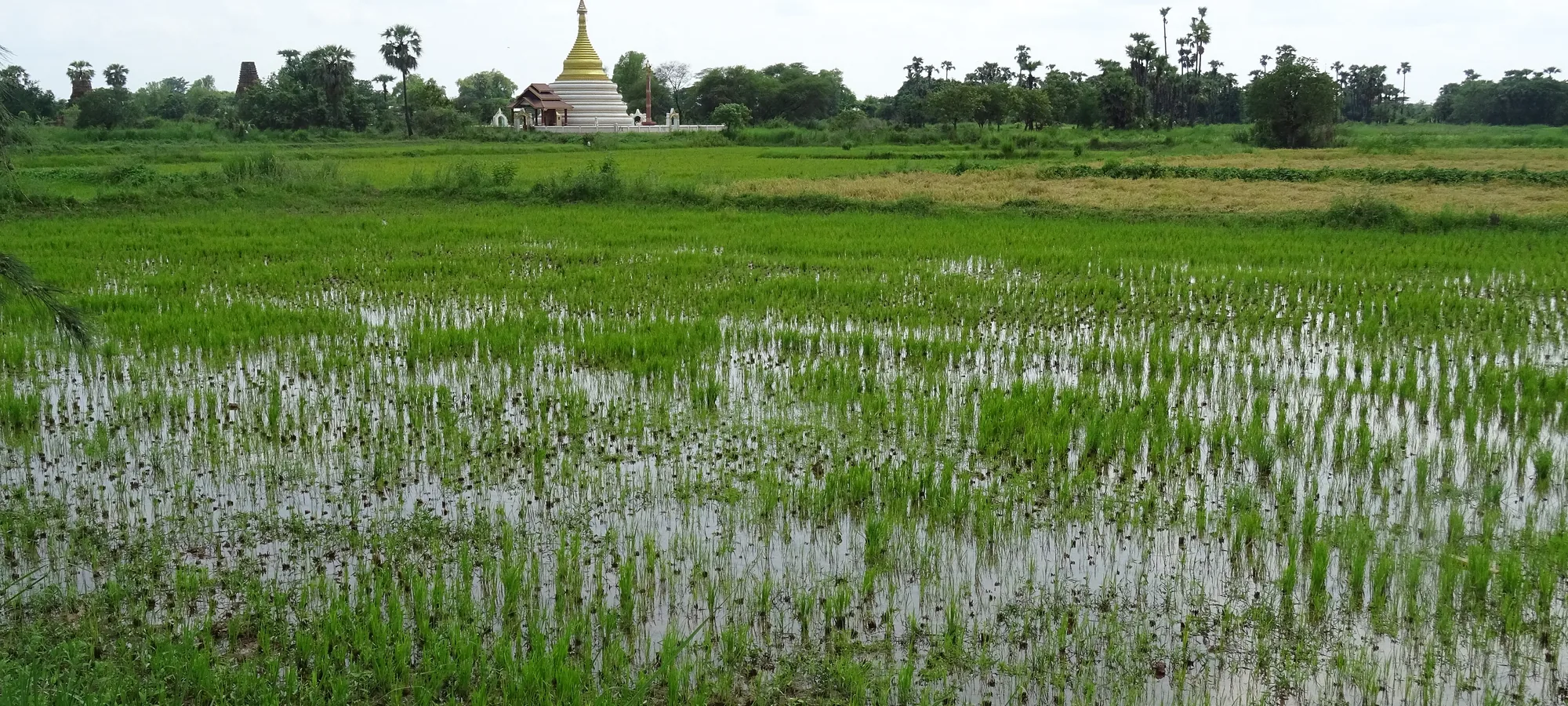
Monsoon paddy fields and a pagoda in Inwa, Mandalay Regionမန္တလေးတိုင်း၊ အင်းဝရှိ မုတ်သုံစပါးကွက်များနှင့် စေတီဘုရား
Between 2019 and 2025, our field team monitored 214 paddy plots in Kyaukpadaung, Nyaung-U, and Myingyan. We measured soil organic matter, pH, water depth, irrigation pumping hours, and yield. The purpose was not to prove that alternate wetting and drying works — that evidence already exists — but to understand why some fields hold water and others do not.
What we found
The plots that retained water longest were not the ones with the deepest wells or the most powerful pumps. They were the plots with the highest soil organic matter. A one-percentage-point increase in organic matter was associated with an average of 2.4 additional days of standing water after irrigation stopped.
That relationship held across soil types, but it was strongest on the heavier soils of Kyaukpadaung and weakest on the sandy soils near the river.
Why this matters
Dry Zone paddy is often described as a water problem. Our data suggests it is a soil problem that shows up as a water problem. When organic matter is low, the soil loses structure; water drains through it rather than being held in the root zone. Farmers respond by pumping more, which raises costs and lowers the water table, which further degrades the soil.
Three recommendations
Rebuild organic matter before investing in pumps. Compost, retained residue, and a pulse crop in the rotation are cheaper per hectare than a new pump and produce a more durable result.
Schedule by soil moisture, not by calendar. A field water tube costs less than one pumping day and gives the household a decision rule that survives the departure of an extension officer.
Pay for the transition, not the equipment. Grants that fund pumps without funding the soil transition tend to produce one good season and a larger debt.
What this does not prove
Our sample is not random. The plots were selected because they were part of existing programmes, and the farmers who joined may be better organised than average. We did not measure methane emissions directly; the figures we cite come from published emission factors. And five seasons is long enough to see a trend, not long enough to promise a permanent shift.
We publish the dataset and the field protocol so that others can test the claim on their own land. That is the point of a position paper: not to close the argument, but to make it testable.
The full paper, including plot-level data and the sampling method, is available on request.
Produced by the Generous Agri field team, Nyaung-U. Reviewed for agronomic accuracy by Daw Aye Aye Myint, Soil Health Lead.ညောင်ဦးရှိ ဂျင်နရပ်စ် အဂရီ ကွင်းဆင်းအဖွဲ့မှ ရေးသားသည်။ မြေဆီလွှာကျန်းမာရေး ခေါင်းဆောင် ဒေါ်အေးအေးမြင့်က စိုက်ပျိုးရေးဆိုင်ရာ တိကျမှုအတွက် ပြန်လည်စစ်ဆေးသည်။
Three years of sampling across Magway and Mandalay shows that the average pH of a field hides the patches that actually limit yield.မကွေးနှင့် မန္တလေးတစ်လျှောက် သုံးနှစ်ကြာ နမူနာကောက်ယူမှုအရ ကွက်၏ ပျမ်းမျှ pH သည် အထွက်နှုန်းကို အကန့်အသတ်ဖြစ်စေသော နေရာများကို ဖုံးကွယ်ထားသည်။
Thirty-two plots, two seasons, one conclusion: AWD saves water without costing yield — but only when the soil can hold what is left.ကွက် ၃၂ ကွက်၊ ရာသီနှစ်ခု၊ ကောက်ချက်တစ်ခု — ရေစိုခြောက်လှည့်ပတ်စိုက်ပျိုးခြင်းက အထွက်မလျော့ဘဲ ရေသက်သာစေသည်။ သို့သော် ကျန်ရေကို မြေက ထိန်းနိုင်မှသာ။