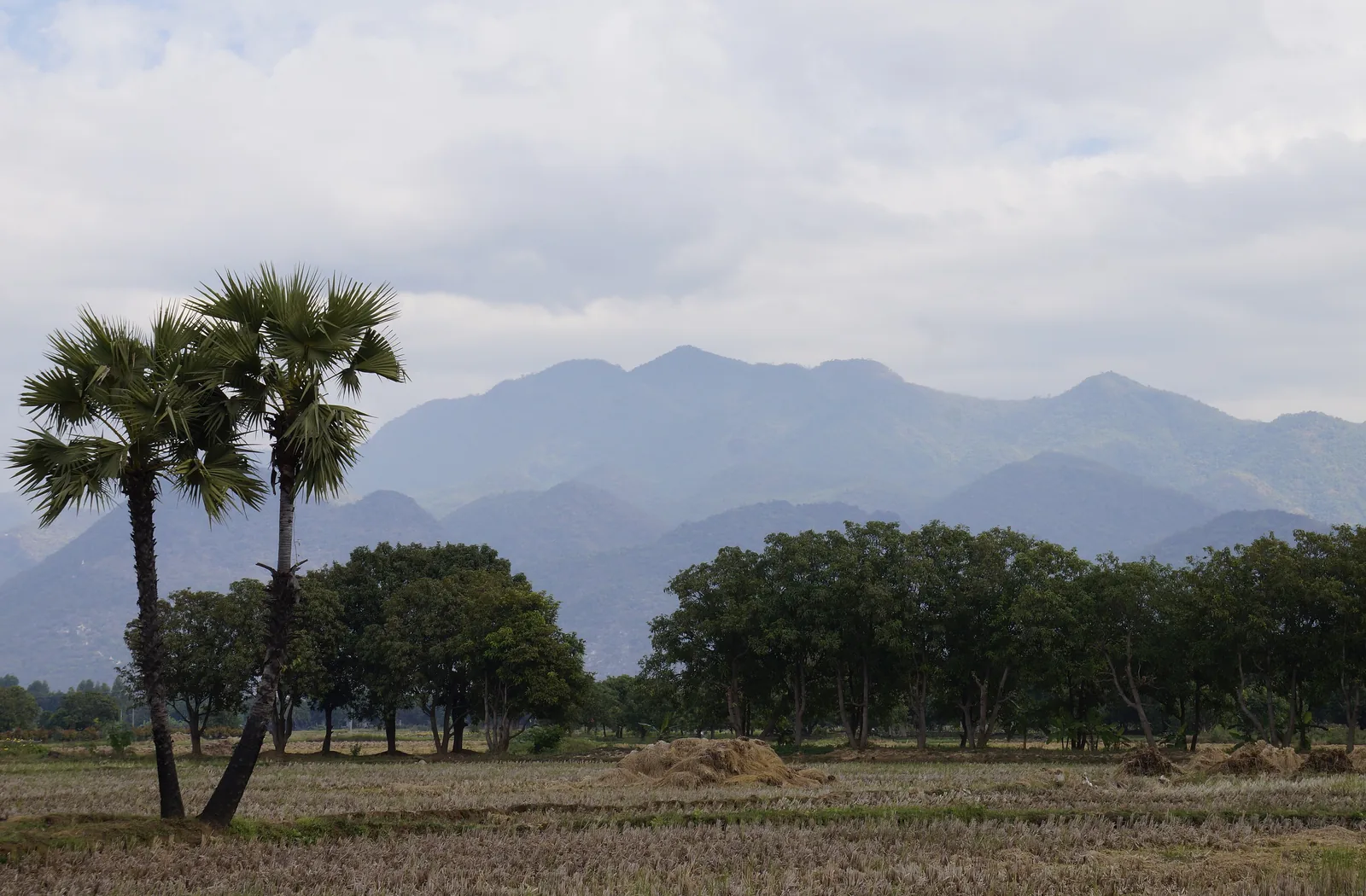
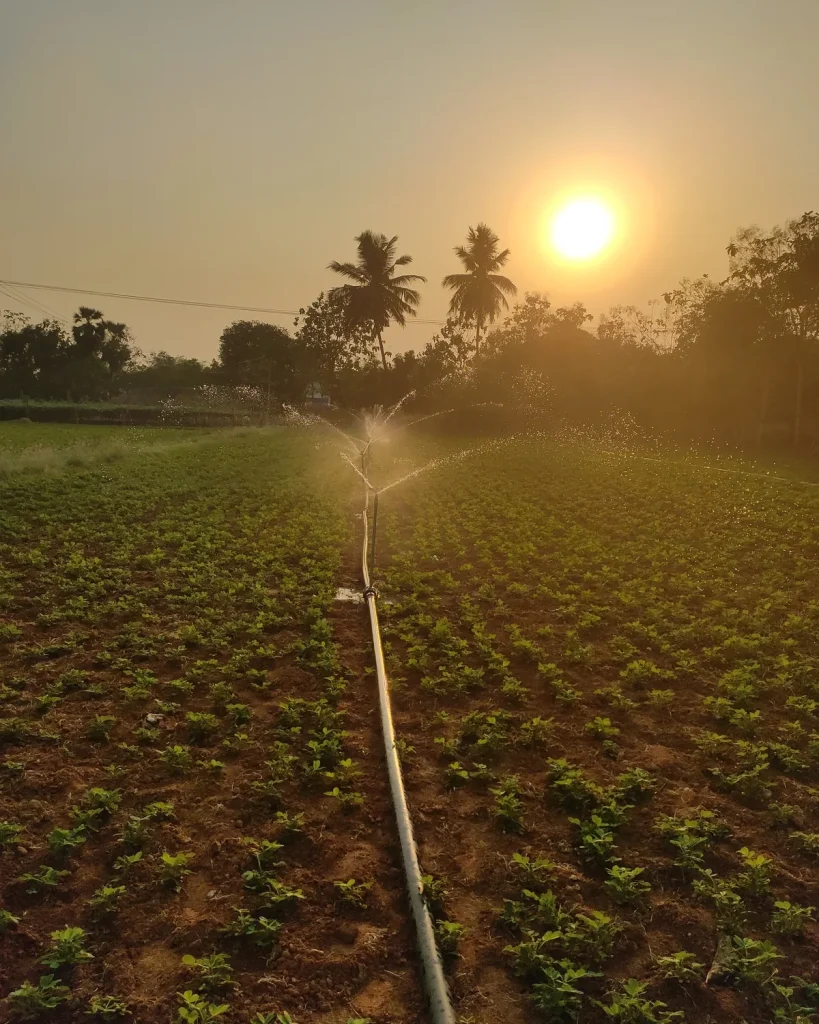
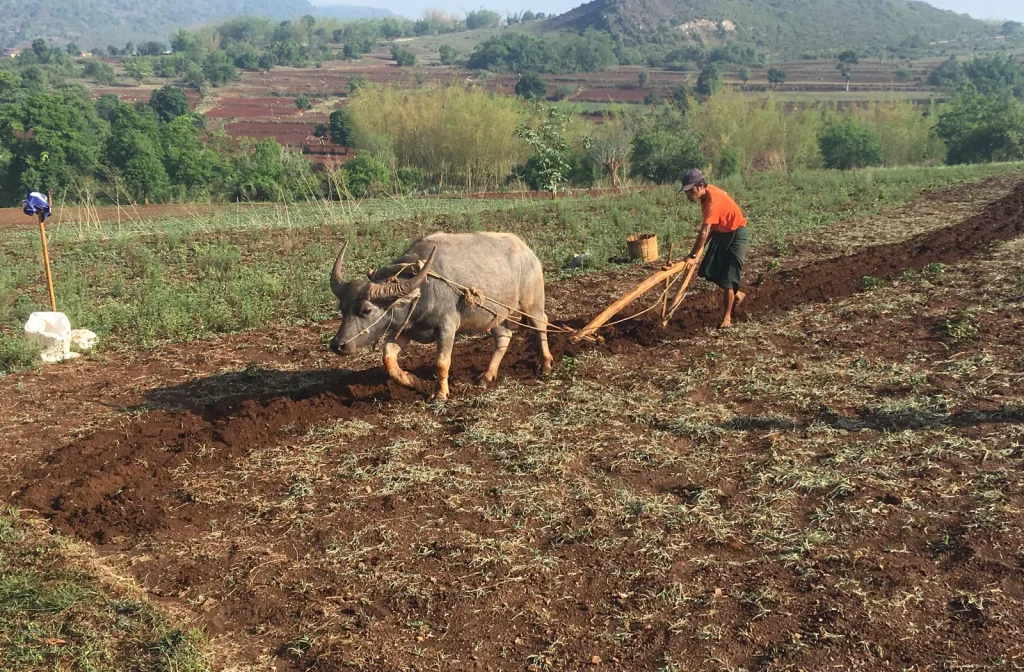
Across the Dry Zone, the 2026 monsoon arrived unevenly. Nyaung-U received useful rain in the last week of June; parts of Pakokku and Myingyan waited another three weeks. That gap matters more than the season total, because it changes how much nitrogen is available when the crop begins to tiller.
Farmers who sowed dry and waited for rain are now deciding whether to top-dress. The honest answer is that some fields need it and some do not — and the difference is visible before you open a bag.
1. Read the soil, not the calendar
Take a spade to three points in the field, 15 cm deep. Squeeze the soil in your fist. If it holds together and leaves a damp film on your palm, the root zone has recharged. If it crumbles and falls apart, the subsoil is still dry, and nitrogen applied now will sit where the roots cannot reach it.
2. Look at the oldest leaves, not the newest
Nitrogen deficiency appears first in the oldest leaves, as a uniform pale green that moves toward yellow. Yellowing in the newest leaves usually points to sulphur, zinc, or waterlogging. Applying urea in that case wastes money and can make the deficiency worse.
Five checks before the first top-dress
- Soil moisture at 15 cm. Does it hold together in the fist?
- Crop stage. Is the field at 30–35 days after transplant, when tillering begins?
- Leaf colour. Are the oldest leaves paler than the rest?
- Water depth. Is there 2–3 cm of standing water at application?
- Weeds. Has the field been weeded in the last ten days?
If three or more answers are no, wait a week and check again.
Split the dose, even if you cannot split the cost
Two smaller applications — at tillering and at panicle initiation — are usually better than one large dose. If cash is tight, apply to the weakest half of the field first and record what happens. A notebook is cheaper than a second bag.
What we are testing this season
Our field officers are working with 40 households in Kyaukpadaung on a simple leaf-colour chart, calibrated for the most common rice varieties in the township. The chart is not a replacement for soil testing. It is a way to decide, in the field, whether a top-dress can wait.
Results will be published in the 2027 dry-season advisory. If you farm in Nyaung-U, Kyaukpadaung, or Myingyan and want to join the trial, write to our field team before 30 November.
ခြောက်သွေ့ဇုန်အနှံ့တွင် ၂၀၂၆ ခုနှစ် မုတ်သုံမိုးသည် မညီမညာ ရွာသွန်းခဲ့သည်။ ညောင်ဦးတွင် ဇွန်လ နောက်ဆုံးအပတ်တွင် အသုံးဝင်သော မိုးရရှိခဲ့ပြီး ပခုက္ကူနှင့် မြင်းခြံ၏ အချို့နေရာများတွင် နောက်ထပ် သုံးပတ်ခန့် စောင့်ခဲ့ရသည်။ ဤကွာဟမှုသည် ရာသီစုစုပေါင်း မိုးရေချိန်ထက် ပို၍ အရေးကြီးသည်။ အဘယ်ကြောင့်ဆိုသော် သီးနှံ ငယ်ထွက်ချိန်တွင် နိုက်ထရိုဂျင် မည်မျှ ရရှိနိုင်သည်ကို ၎င်းက ပြောင်းလဲစေသည်။
မိုးကို စောင့်ပြီး ခြောက်သွေ့စိုက်ပျိုးခဲ့သော တောင်သူများသည် ယခု မြေဩဇာ ထပ်တိုးကျွေးရန် ဆုံးဖြတ်နေကြသည်။ ရိုးသားသော အဖြေမှာ အချို့ကွက်များ လိုအပ်ပြီး အချို့ မလိုအပ်ခြင်း ဖြစ်သည်။ ထိုကွာခြားမှုကို အိတ်ဖွင့်မီကပင် မြင်နိုင်သည်။
၁။ ပြက္ခဒိန်ကို မဟုတ်ဘဲ မြေကို ဖတ်ပါ
ကွက်၏ နေရာသုံးခုတွင် ၁၅ စင်တီမီတာ အနက်အထိ ဂေါ်ပြားဖြင့် တူးပါ။ မြေကို လက်ဖြင့် ဆုပ်ကြည့်ပါ။ ဆုပ်လိုက်လျှင် စုစည်းနေပြီး လက်ဖဝါးတွင် စိုစွတ်သော အလွှာကျန်ပါက အမြစ်အလွှာ ရေပြန်ပြည့်ပြီ ဖြစ်သည်။ ကြေမွပြီး ကွဲထွက်သွားပါက မြေအောက်လွှာ ခြောက်သွေ့နေဆဲဖြစ်ပြီး ယခု ကျွေးသော နိုက်ထရိုဂျင်သည် အမြစ်မရောက်နိုင်သော နေရာတွင် ကျန်ရစ်မည်။
၂။ အရွက်သစ်များကို မဟုတ်ဘဲ အရွက်ဟောင်းများကို ကြည့်ပါ
နိုက်ထရိုဂျင် ချို့တဲ့မှုသည် အရွက်ဟောင်းများတွင် ဦးစွာ ပေါ်လာသည်။ ညီညာသော ဖျော့တော့သော အစိမ်းရောင်မှ အဝါရောင်သို့ ပြောင်းလာသည်။ အရွက်သစ်များ ဝါခြင်းက များသောအားဖြင့် ဆာလဖာ၊ ဇင့် သို့မဟုတ် ရေဝပ်ခြင်းကို ညွှန်ပြသည်။ ထိုအခြေအနေတွင် ယူရီးယား ကျွေးခြင်းက ငွေကုန်ပြီး ချို့တဲ့မှုကို ပို၍ ဆိုးစေနိုင်သည်။
မြေဩဇာ ပထမအကြိမ် မကျွေးမီ စစ်ဆေးရန် ငါးချက်
- ၁၅ စင်တီမီတာ အနက်တွင် မြေအစိုဓာတ်။ လက်ဖြင့် ဆုပ်လျှင် စုစည်းနေသလား။
- သီးနှံအဆင့်။ စိုက်ပြီး ရက် ၃၀–၃၅ အတွင်း ငယ်ထွက်ချိန် ရောက်နေသလား။
- အရွက်အရောင်။ အရွက်ဟောင်းများက ကျန်အရွက်များထက် ဖျော့နေသလား။
- ရေအနက်။ မြေဩဇာကျွေးချိန်တွင် ရေ ၂–၃ စင်တီမီတာ ရှိသလား။
- ပေါင်းမြက်။ လွန်ခဲ့သော ဆယ်ရက်အတွင်း ပေါင်းရှင်းပြီးသလား။
အဖြေ သုံးခု သို့မဟုတ် ထို့ထက်ပို၍ “မဟုတ်” ဖြစ်ပါက တစ်ပတ်စောင့်ပြီး ထပ်စစ်ပါ။
ကုန်ကျစရိတ် မခွဲနိုင်သည့်တိုင် အကြိမ်ခွဲပါ
ငယ်ထွက်ချိန်နှင့် နှံစွပ်ထွက်ချိန်တွင် တစ်ကြိမ်စီ ကျွေးခြင်းသည် တစ်ကြိမ်တည်း အများကြီး ကျွေးခြင်းထက် များသောအားဖြင့် ပိုကောင်းသည်။ ငွေကြေး တင်းကျပ်ပါက အကွက်၏ အားနည်းသော တစ်ဝက်ကို အရင်ကျွေးပြီး ဖြစ်ပျက်သည်ကို မှတ်တမ်းတင်ပါ။ မှတ်စုစာအုပ်သည် ဒုတိယ မြေဩဇာအိတ်ထက် စျေးသက်သာသည်။
ယခုရာသီ ကျွန်ုပ်တို့ စမ်းသပ်နေသည်များ
ကျွန်ုပ်တို့၏ ကွင်းဆင်းအရာရှိများသည် ကျောက်ပန်းတောင်းရှိ အိမ်ထောင်စု ၄၀ နှင့်အတူ ရိုးရှင်းသော အရွက်အရောင် ဇယားကို စမ်းသပ်နေသည်။ ဇယားသည် မြေဆီလွှာ စစ်ဆေးမှုကို အစားထိုးခြင်း မဟုတ်ပါ။ မြေဩဇာ ထပ်တိုးကျွေးမှုကို စောင့်နိုင်သလား ကွင်းပြင်တွင် ဆုံးဖြတ်ရန် နည်းလမ်းတစ်ခု ဖြစ်သည်။
ရလဒ်များကို ၂၀၂၇ ခုနှစ် ခြောက်သွေ့ရာသီ အကြံပြုချက်တွင် ထုတ်ဝေပါမည်။ ညောင်ဦး၊ ကျောက်ပန်းတောင်း သို့မဟုတ် မြင်းခြံတွင် စိုက်ပျိုးပြီး စမ်းသပ်မှုတွင် ပါဝင်လိုပါက နိုဝင်ဘာ ၃၀ မတိုင်မီ ကျွန်ုပ်တို့၏ ကွင်းဆင်းအဖွဲ့ထံ စာရေးပါ။